

CAT & Genny training
Locate and avoid underground services safely with a Cable Avoidance Tool and Signal Generator, in line with HSG47.
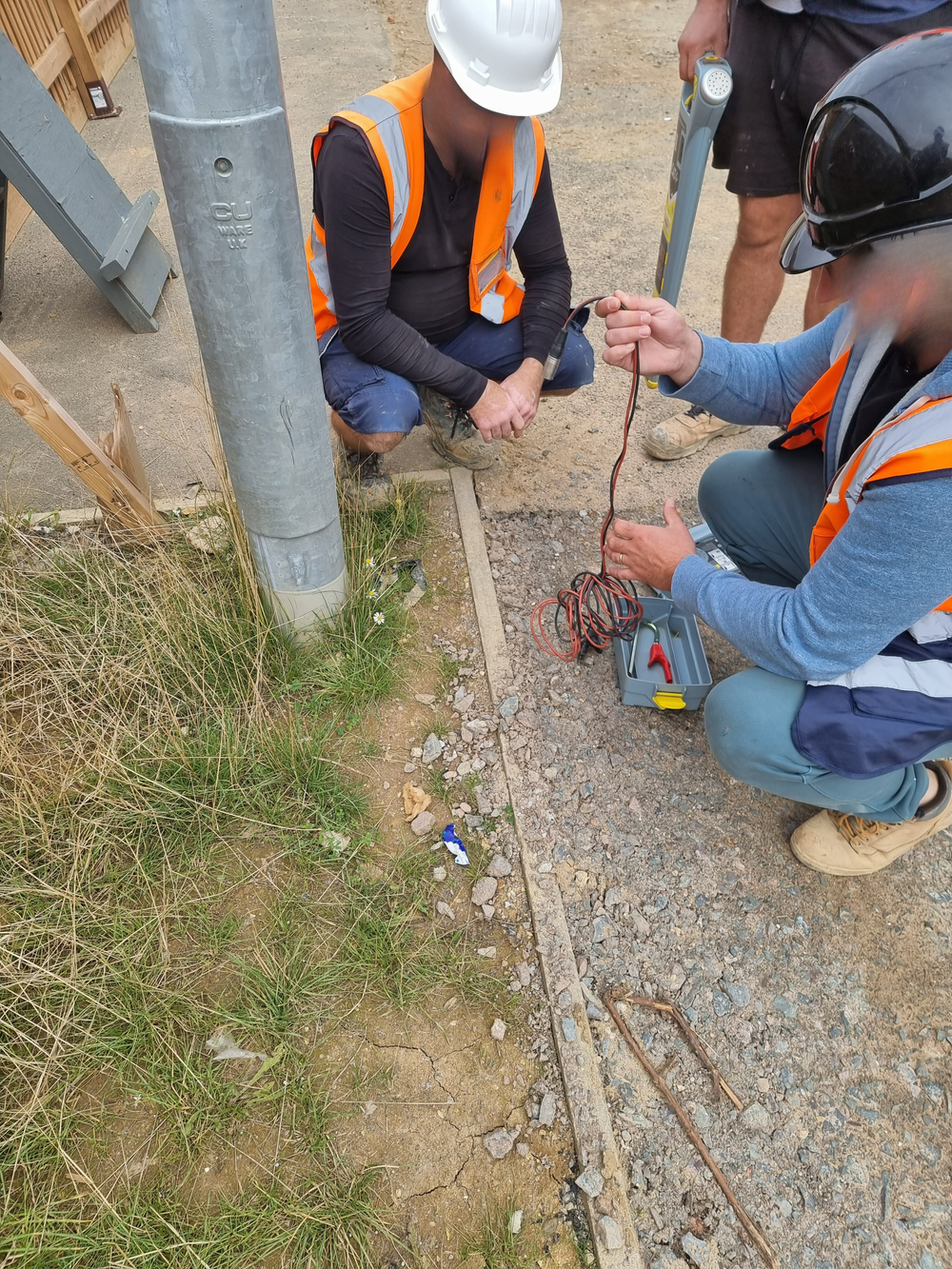
The CAT & Genny (Cable Avoidance Tool and Signal Generator) course gives your team the skills and knowledge to locate and avoid underground services safely during excavation and groundworks.
It prevents accidents, service disruption and costly damage from striking buried cables, pipes and ducts. Theory is combined with plenty of hands-on practice, so delegates leave able to use detection equipment confidently on a real site.
Who should attend
Groundworkers, operatives, supervisors and anyone who digs, breaks out or uses a CAT & Genny before excavation.
What you will learn
- Understand the principles of electromagnetic detection and the limits of CAT & Genny equipment.
- Read buried service plans and identify potential hazards.
- Carry out pre-use checks, maintenance and correct scanning techniques.
- Work in line with HSG47, Avoiding danger from underground services.
- Mark and avoid underground utilities safely to reduce risk on site.
Course content
Theory
- Introduction to the equipment. The CAT and Genny, including models such as the Genny 4, and how they work together to detect passive and active signals.
- Legislation and guidance. The Health and Safety at Work Act and HSG47, legal responsibilities and the consequences of non-compliance.
- Hazards and risks. Electric shock, gas leaks and water main bursts, hazard avoidance and the importance of risk assessment.
- Electromagnetic theory. Signal modes (power, radio and Genny) and what affects accuracy, such as ground conditions and interference.
- Buried service plans. Symbols, colour coding and the limits of plans compared with on-site detection.
- Equipment limitations. What a CAT & Genny can and cannot find, including non-metallic pipes, and when other tools such as GPR are needed.
Practical
- Pre-use inspections. Checking equipment for faults and carrying out daily tests.
- Scanning techniques. Full site scans, grid patterns, direct connection and induction, locating simulated services.
- Marking and reporting. Marking services on the ground with paint or flags and recording findings for the team.
- Safe work practices. Permit to dig and emergency response if a service is struck.
Assessment & certificate
Ongoing assessment throughout the day, focused on practical ability. Delegates must show competent use of the equipment in a simulated environment. On successful completion they receive a certificate of competence, valid for 3 years.
Why it matters
Fewer utility strikes, injuries, delays and financial penalties. A safer site, more confident teams and compliance with health and safety standards. Refresher training is recommended every 3 years.
Book this course for your team.
Send the number of operatives and your site location. We’ll come back with dates and a price.