

Safe Dig Awareness
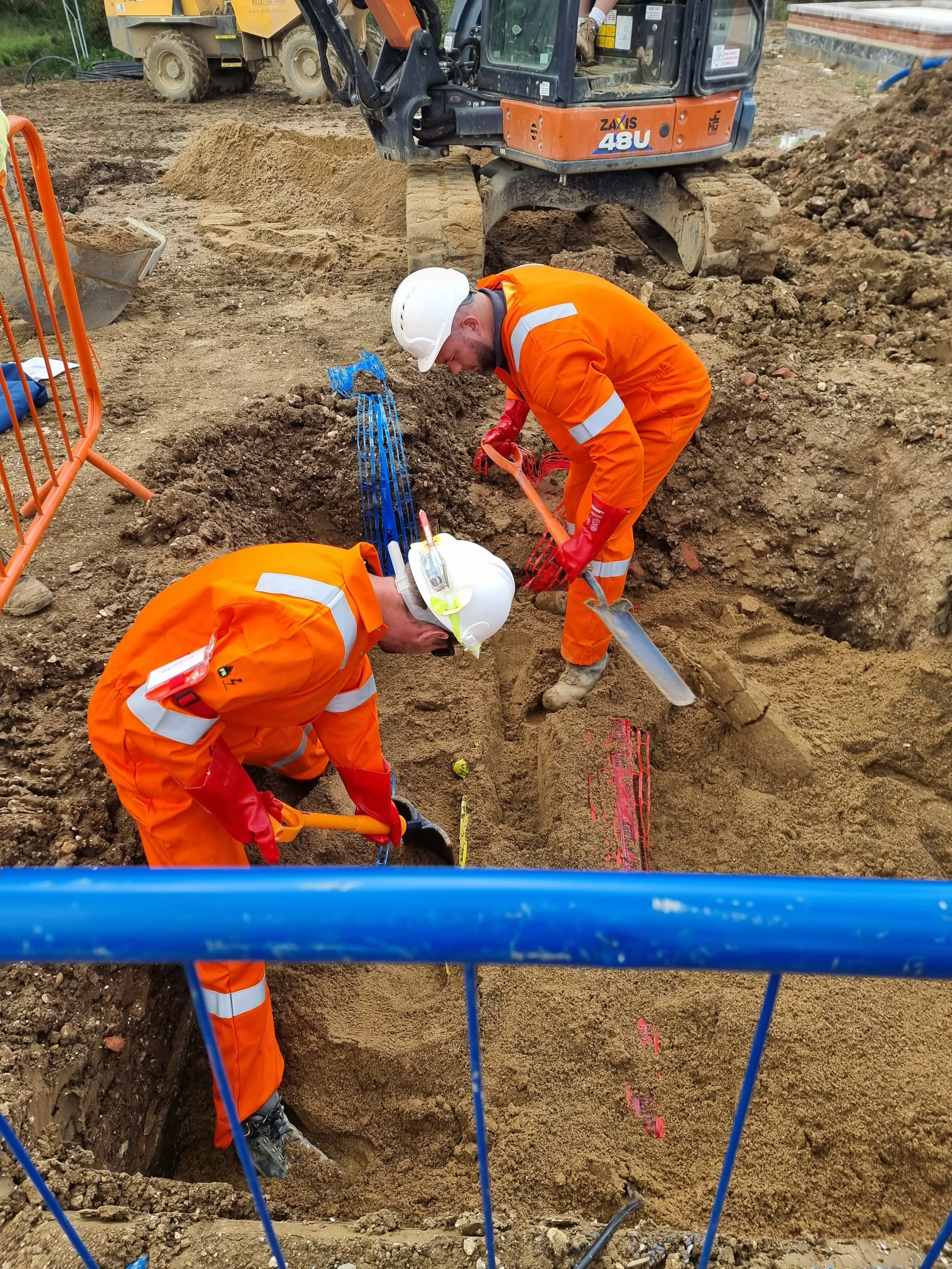
Safe Dig Awareness Training Course
Our Safe Dig Awareness training provides essential knowledge and practical skills for safe excavation in the UK, aligned with HSG47 (Avoiding Danger from Underground Services). It includes Cat & Genny overview, Permit to Dig processes, and hands-on mock trench exercises to prevent cave-ins, strikes, and collapses.
Who Should Attend
Construction operatives, groundworkers, supervisors, and anyone involved in excavation or utility work. Ideal for EUSR-aligned awareness or practical safe digging competence.
Course Objectives
Delegates will:
Understand excavation hazards and controls.
Use Cat & Genny for service location.
Complete and follow a Permit to Dig.
Apply safe excavation techniques, including hand digging.
Expose services safely in controlled conditions.
Course Content
Theory integrated with realistic practical sessions.
Theoretical Components
Overview of Cat & Genny: principles, use for locating services, and integration into safe digging (as per HSG47).
Excavation hazards: cave-ins, falls, hazardous atmospheres, falling loads, and utility strikes.
UK regulations: HSG47, PUWER, CDM, and competent person roles.
Soil types, shoring/benching/sloping requirements, and atmospheric monitoring.
Permit to Dig walkthrough: key points include risk assessment completion, service plans reviewed, Cat & Genny scan results recorded, control measures specified (e.g., trial holes, hand digging zones), authorised sign-off, emergency contacts, and ongoing monitoring/supervision.
Practical Components
Cat & Genny scanning and marking in simulated scenarios.
Preparation of a mock trench: burial of simulated services (pipes/cables).
Safe excavation to expose the service: hand digging techniques, trial holes, shoring where appropriate, spoil management, access/egress (ladders/ramps), and final verification.
Inspection, protective systems, and emergency response practice.
Duration
Typically 4–6 hours to allow thorough practical elements.
Assessment and Certification
Theory quiz and practical competency demonstration. Certificate issued, valid 3 years.
Benefits
Prevents life-threatening incidents, ensures HSG47 compliance, and builds confidence in safe groundwork.
Cut the cost on service strikes, Book below now!