

FIT2FIT Approved Face Fit Testing
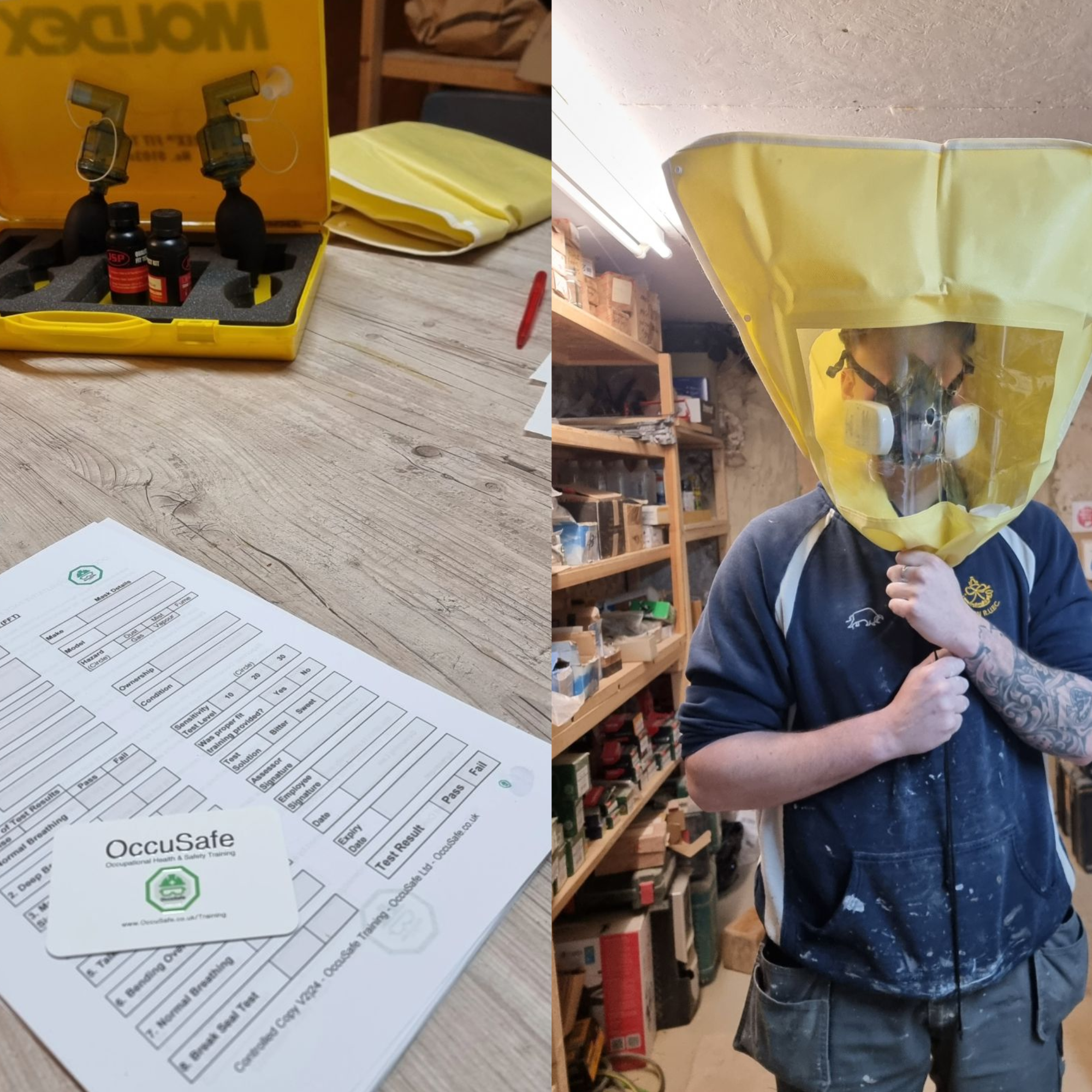
Face Fit Testing & Dust Awareness Course
Face Fit Testing ensures respiratory protective equipment (RPE) like masks fits properly to protect against airborne hazards such as dust, fumes, or biohazards. This course covers testing methods and fit factors for effective seal verification.
Who Should Attend
For health and safety officers, supervisors, and workers using face-fitting RPE in construction, manufacturing, or healthcare. Also for those becoming fit testers.
Course Objectives
Delegates will:
Understand RPE types and selection.
Perform qualitative and quantitative fit tests.
Identify fit issues and solutions.
Comply with COSHH regulations.
Train others if on tester course.
Course Content
Theory and practical testing.
RPE Basics: Types (FFP3, half-masks), limitations, and maintenance.
Fit Testing Methods: Qualitative (taste test) vs. quantitative (particle counting).
Hazards: Why proper fit is crucial for protection.
Regulations: HSE guidelines on face fit testing.
Sensitivity Test: Checking taste threshold (bitter/sweet).
Fit Test Exercises: 7 movements (talking, bending) to simulate work.
Donning/Doffing: Correct mask application and seal checks.
Record Keeping: Documenting results and re-test schedules.
Duration
Dependant on number of operatives, bookings based on half or full day.
Assessment and Certification
Practical test and questionnaire. Certificate issued, valid for 1-3 years (Dependant).
Benefits
Ensures RPE effectiveness, reduces exposure risks, and complies with law. Improves worker confidence.
Prerequisites
Clean-shaven for face-fitting masks; medical questionnaire.
Get tested! Book Below.